City Nature Challenge sees residents discovering beauty in their backyards
05 May 2020
The City of Cape Town participated in the global City Nature Challenge which took place between 24 and 27 April 2020. Despite being in lockdown, Capetonians enthusiastically took up the challenge to discover all the living things on their own properties and still managed to record the most observations worldwide.
‘I would like to thank all the residents who participated. Your enthusiasm for capturing the beauty of our natural environment, and this time right in your backyards, must be commended. We now have another City Nature Challenge under the belt where we captured the most observations worldwide and recorded the second most species. Even though we were not allowed to leave our homes, we have recorded a formidable base of species in our gardens and streets across the city,’ said the City’s Mayoral Committee Member for Spatial Planning and Environment, Alderman Marian Nieuwoudt.
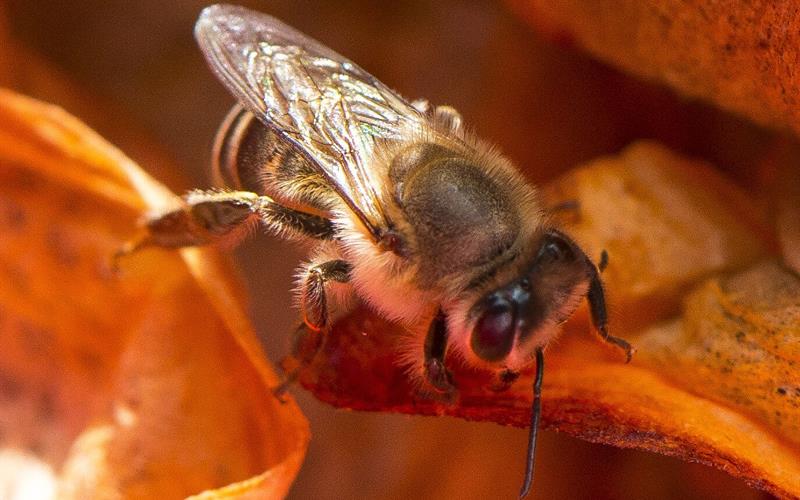
Collectively, Cape Town recorded an impressive 34 254 observations and 3 270 species. The Common Spekboom; Western Honey Bee; Marbled Leaf-toed Gecko; Garden Snail; Cape Honeysuckle and Chinese Hibiscus featured as the most recorded species.
Nearly 50 000 residents from all over the world participated and made a total of 810 527 observations and recorded 32 000 species.
Runners-up included various cities within the United States such as Dallas with 33 638 observations and San Francisco with 31 468. The Western Cape’s Garden Route secured tenth place.
Cape Town’s top observer, Jeremy Gilmore, listed 834 observations during the challenge. This grade 11 learner has a passion for learning about the indigenous flora of Southern Africa, especially nature conservation in the fynbos biome around the Western Cape. In his spare time he also removes invasive species with the Friends of Tokai Park that cause a threat to the city’s natural vegetation.
‘Several hundred observations from a garden is no mean achievement. We appreciate that we have residents who realise just how fortunate we are to have a natural environment as biodiverse as we do. Residents are welcome to continue recording their observations on the iNaturalist app,’ said Alderman Nieuwoudt.
The City received great feedback from various participants who found many interesting creatures such as the ant-mimicking spider, for example, which is seldom recorded. These spiders do not feed on ants but rather live in close proximity to them thereby getting some form of protection. Overall, residents simply enjoyed taking the time out to capture the natural beauty in their midst.
In light of the worldwide lockdown restrictions, the challenge included both indigenous and alien animals and plants, and cultivated plants, especially because it was focused on residential gardens.
The top 20 species recorded included :
1. Portulacaria afra, Common Spekboom
2. Apis mellifera, Western Honey Bee
3. Afrogecko porphyreus, Marbled Leaf-toed Gecko
4. Cornu aspersum Brown, Garden Snail alien
5. Tecomaria capensis, Cape Honeysuckle
6. Hibiscus rosa-sinensis, Chinese Hibiscus
7. Crassula ovata, Jade Stonecrop
8. Aloe arborescens, Krantz Aloe
9. Strelitzia reginae, Common Bird-of-paradise Flower
10. Cotyledon orbiculata, Pig Ears
11. Streptopelia senegalensis, Laughing Dove
12. Passer melanurus, Cape Sparrow
13. Cinnyris chalybeus, Southern Double-collared Sunbird
14. Streptopelia semitorquata, Red-eyed Dove
15. Clivia miniata, Natal Lily
16. Plumbago auriculata, Blue Plumbago
17. Plectranthus neochilus, Mosquito Bush
18. Zosterops virens, Cape White-Eye
19. Lavandula dentate, French Lavender
20. Bradypodion pumilum, Cape Dwarf Chameleon
End
Published by:
City of Cape Town, Media Office